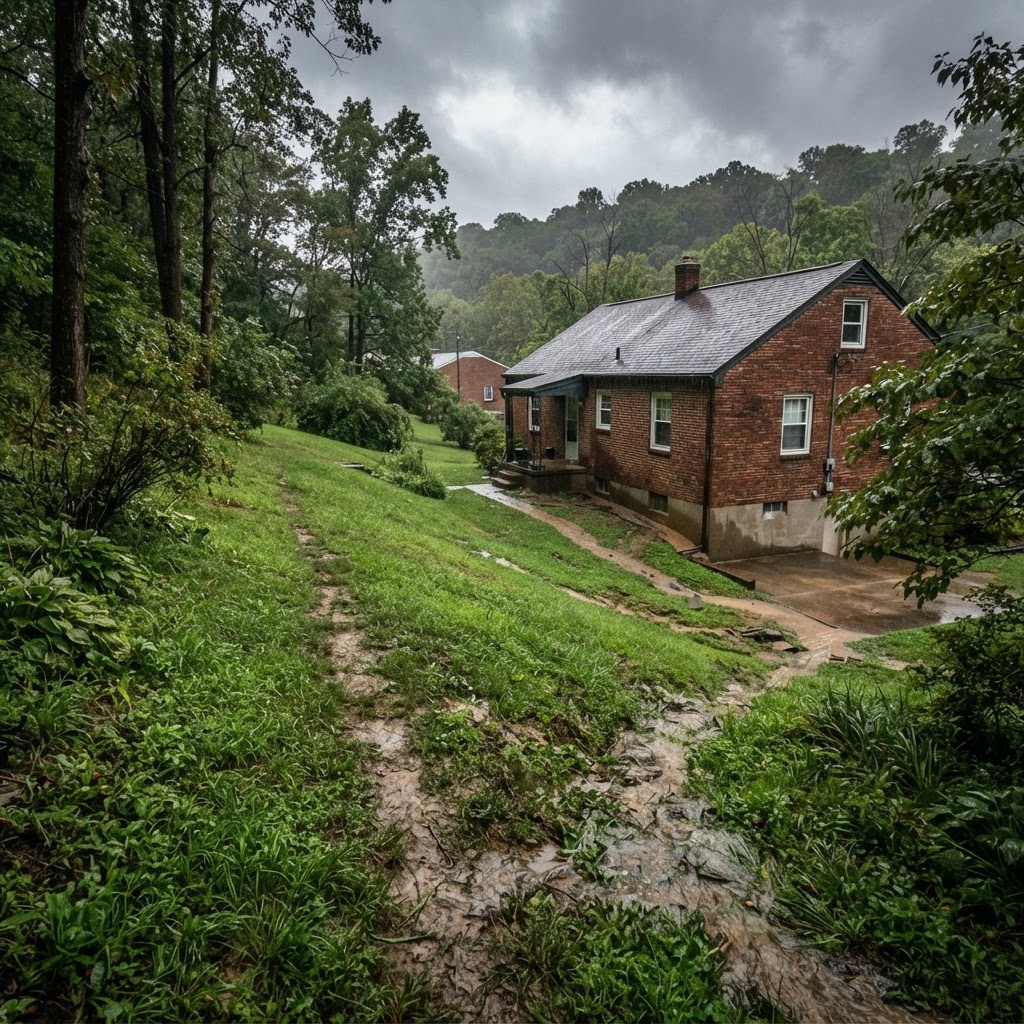
Waterproofing a basement in Bloomington usually comes down to two choices: catch the water once it reaches the inside of the wall, or stop it at the outside face. Which one fits depends on your lot. A house on a ridge near the Morgan-Monroe forest edge has different problems from a ranch in a flat subdivision off State Road 37, and an older home with a limestone or block foundation behaves differently from a newer poured wall.
We connect you with an independent local contractor who can inspect and recommend. Call (317) 798-0634.
Interior Drain Tile and Sump Systems
This is the most common fix for seepage in Monroe County basements.
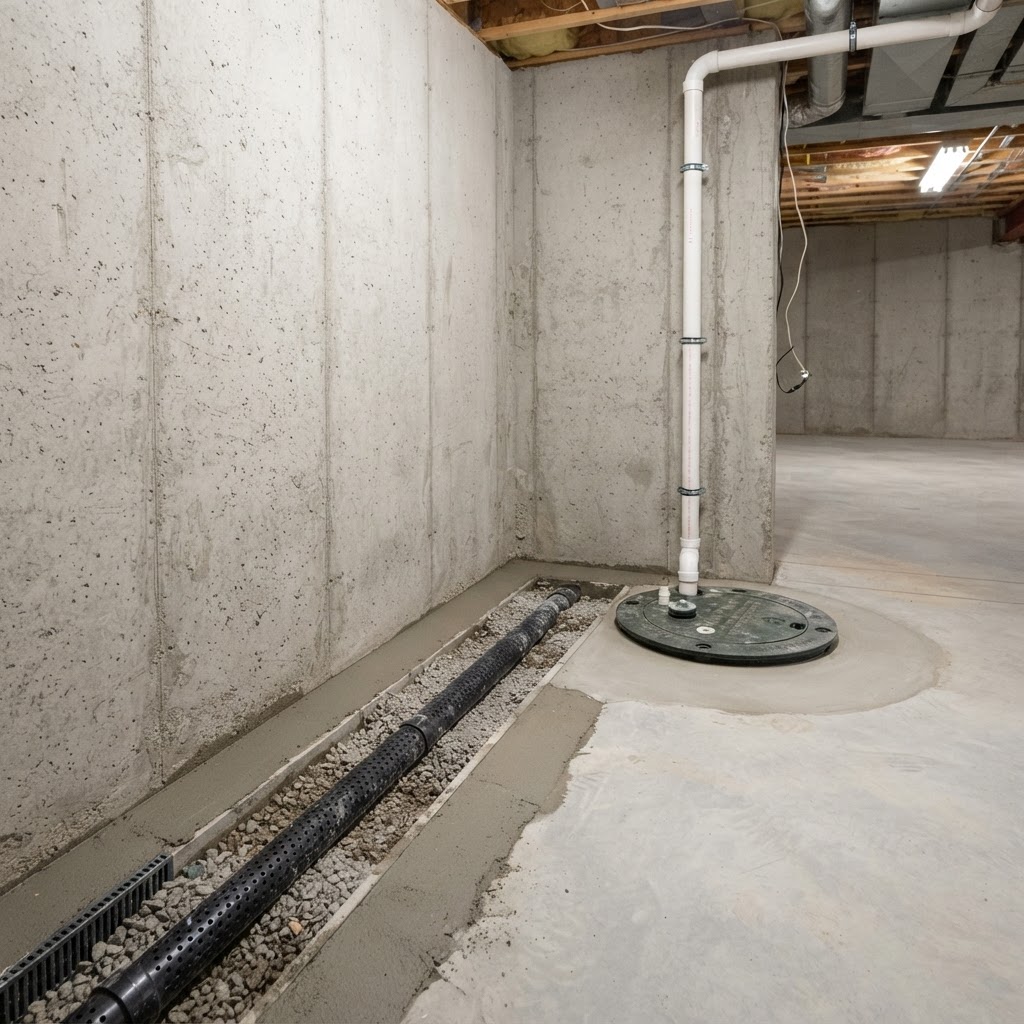
- The crew removes a strip of the concrete floor, typically 12 inches or so wide, along the leaking walls or the full perimeter.
- They dig a trench down to around footing level, lay perforated pipe in washed stone and slope it toward a sump basin.
- On block walls they often drill weep holes into the lowest course so water trapped in the hollow cores can drain.
- A plastic dimple sheet or wall flange is set at the wall base so water running down the wall drops into the drain instead of across the floor.
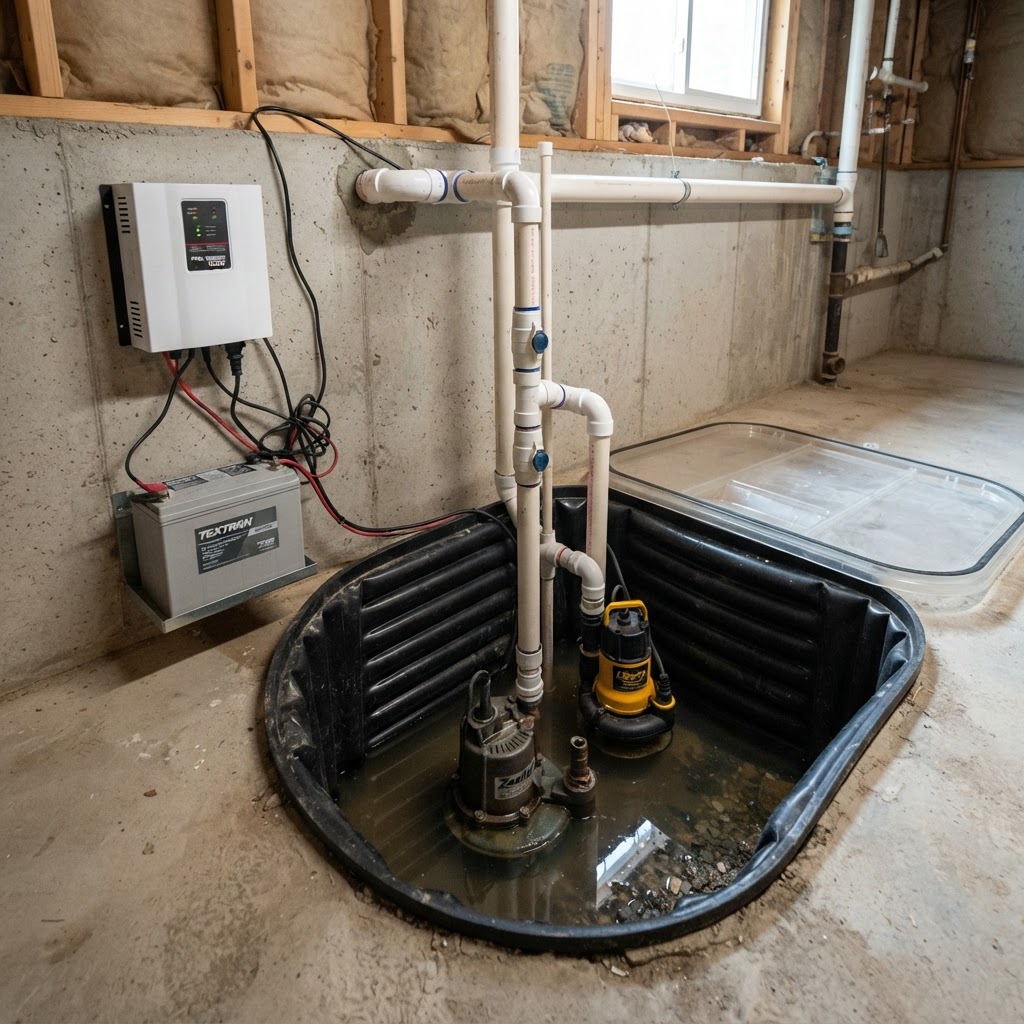
- The floor is re-poured and the sump pump discharges outside, ideally well away from the house and not onto a neighbor's lot or back down your own slope.
Why it works here: it relieves water pressure under and beside the slab instead of trying to hold back a saturated hillside. It also doesn't require digging through rocky soil outside.
Limits: it doesn't keep the outside of the wall dry, and it depends on the pump running. A backup pump is worth discussing.
Exterior Excavation Waterproofing
The contractor digs down along the outside of the foundation, cleans the wall, repairs cracks, applies a waterproof membrane (not just damp-proofing tar), adds a drainage board, and lays new footing drain tile before backfilling with stone.
When it makes sense in Bloomington:
- The wall is also bowing or needs structural repair from the outside.
- Only one wall leaks and it's easy to reach (no deck, patio or driveway in the way).
- You want to keep the basement finish untouched.
Trade-offs: cost and disruption. Landscaping, steps and sidewalks get torn up. Where the limestone sits shallow, digging can be slower and more expensive. Ask whether rock was expected and how it's priced if found.
Combining Methods
Many jobs mix both, such as exterior work on the uphill wall plus interior drain on the remaining sides, or a full interior system plus regrading and downspout lines. A good contractor explains why.
Drainage Basics That Matter on Hilly Lots
- Downspouts should discharge several feet from the house, more on a slope, and not onto a walk that funnels water back.
- A swale or curtain drain uphill can intercept runoff before it reaches the foundation.
- Window wells need covers or gravel and a drain.
- Don't point discharge lines toward a sinkhole without checking local rules. Some areas restrict directing water into karst features.
What It Costs
From HomeGuide's basement waterproofing cost guide:
- Interior waterproofing: about $6,000 to $12,000
- Exterior waterproofing: about $10,000 to $18,000
- Interior French drain: about $4,000 to $17,000
- Exterior drain: about $30 to $90 per linear foot
- Regrading: about $1,000 to $5,000
These are national averages, not a Bloomington quote. Expect the contractor to measure your walls and price the specific job.
Permits
Exterior excavation, new drainage tie-ins and structural repairs may require permits from the City of Bloomington or Monroe County, depending on your address. Ask the contractor who pulls them.
Frequently Asked Questions
Get a waterproofing plan that fits your lot.
Call (317) 798-0634 or request a quote.