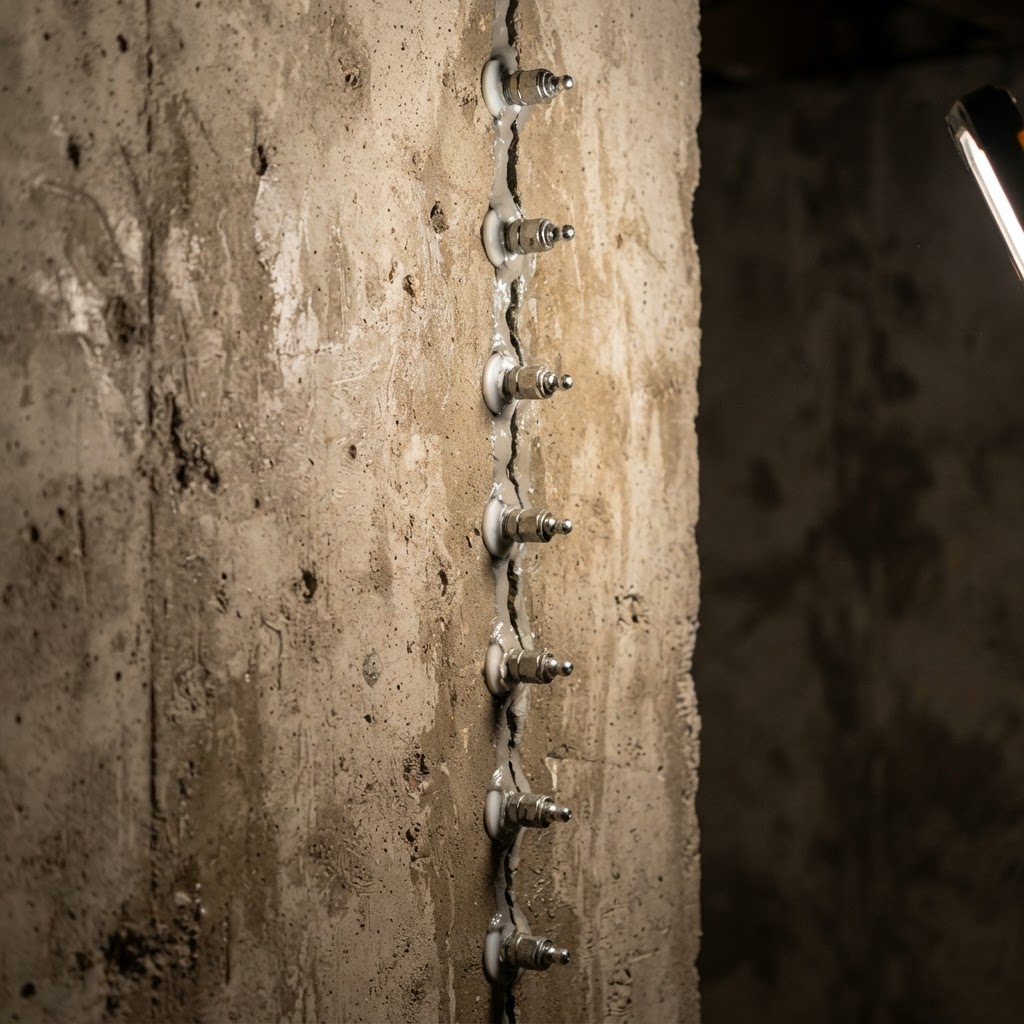
Nearly every concrete foundation cracks a little as it cures and settles. In Bloomington, the swelling and shrinking of clay soil over limestone, plus water pushing in from uphill, gives those cracks plenty of reason to open and leak. The questions that matter: is water coming through, and is the crack still moving?
Tell us about yours and we'll connect you with an independent local contractor. Call (317) 798-0634.
Types of Cracks
- Hairline vertical cracks in poured walls are usually shrinkage. Seal them if they leak.
- Diagonal cracks from a window corner or near a wall end often come from settlement or stress concentration.
- Stair-step cracks in block walls follow the mortar joints and can mean settlement or soil pressure.
- Horizontal cracks in block or poured walls usually mean the soil outside is pushing the wall inward. These need prompt evaluation.
- Floor cracks in the slab are common and rarely structural, but they can let water up when the water table is high.
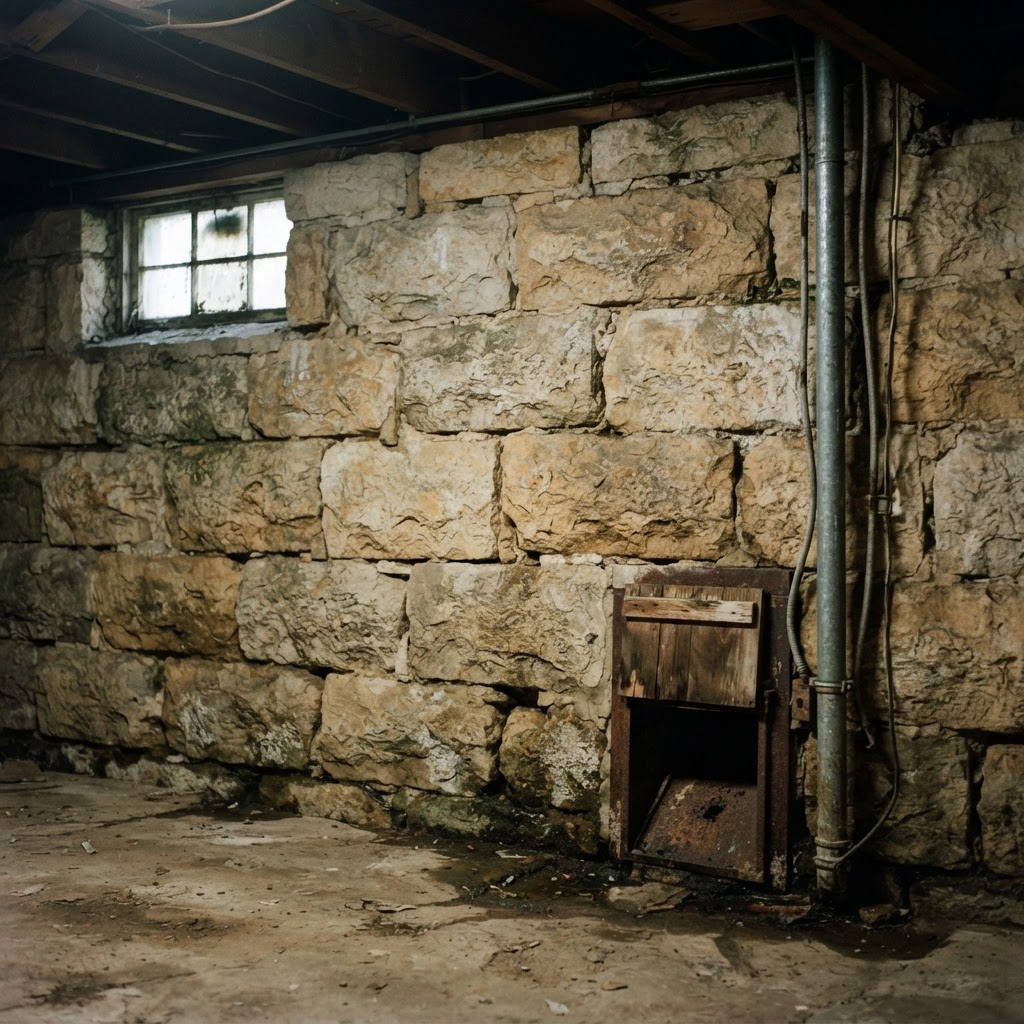
HomeGuide's foundation crack repair guide flags horizontal cracks longer than 12 inches, cracks wider than 1/8 inch, active leaks, and sticking doors or windows as reasons to call promptly.
How Cracks Get Sealed
Polyurethane injection
Ports are set along the crack, and a flexible foam is pumped in under pressure. It expands to fill the crack through the full wall thickness. It's a good choice for leaking cracks that may move a little with the seasons.
Epoxy injection
Epoxy cures hard and bonds the concrete. It's used when the crack is dry and stable and some strength restoration is wanted.
Exterior crack repair
If the outside is dug up anyway, the crack can be sealed and membraned from the soil side.
Block walls
Block cracks can't be injected like poured walls because the cores are hollow. Leaks in block are usually handled with drainage, and movement with reinforcement.
When It's Structural
Bowing, leaning or sheared walls need more than sealing. Typical options include carbon fiber straps, wall anchors, steel braces or helical tiebacks. Settling near a sinkhole or a filled low spot may call for piers. A waterproofing contractor may refer you to a structural specialist or engineer. That's a good sign, not a dodge.
Costs (HomeGuide national averages)
- Non-structural crack injection: about $250 to $800+ per crack
- Minor structural crack repairs: about $1,000 to $5,000+
- Carbon fiber straps (per crack): about $900 to $2,000+
- Wall anchors: about $500 to $1,000 each
- Major structural repair: about $10,000 to $30,000+
Source: HomeGuide. These aren't quotes.
Monitor It Yourself
Mark each end of the crack in pencil with the date and measure the width with a crack card or a coin. Check again after a season. Growth means the crack is active.
Permits
Simple crack injection usually doesn't need a permit. Structural repairs may, depending on the City of Bloomington, Monroe County or your town's rules. Confirm with the contractor.
Frequently Asked Questions
Get that crack looked at.
Call (317) 798-0634 or request a quote.