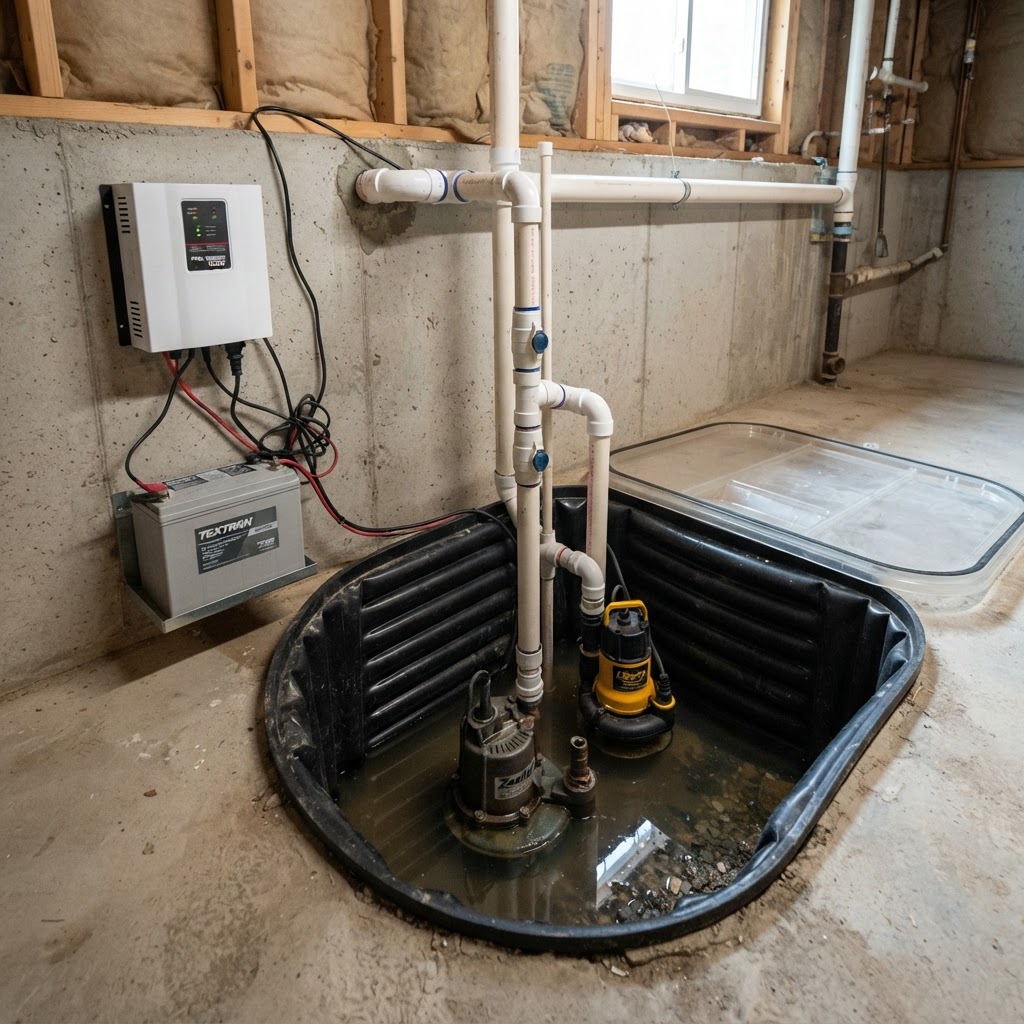
Thunderstorms in south-central Indiana often bring the two things a basement fears most at once: a lot of water and a power outage. A sump pump moves water out from under the floor before it rises, and a backup keeps it moving when the lights go off. For homes in Bloomington, Ellettsville or out in the county, it's one of the most useful waterproofing upgrades.
We connect you with an independent local installer. Call (317) 798-0634.
Services
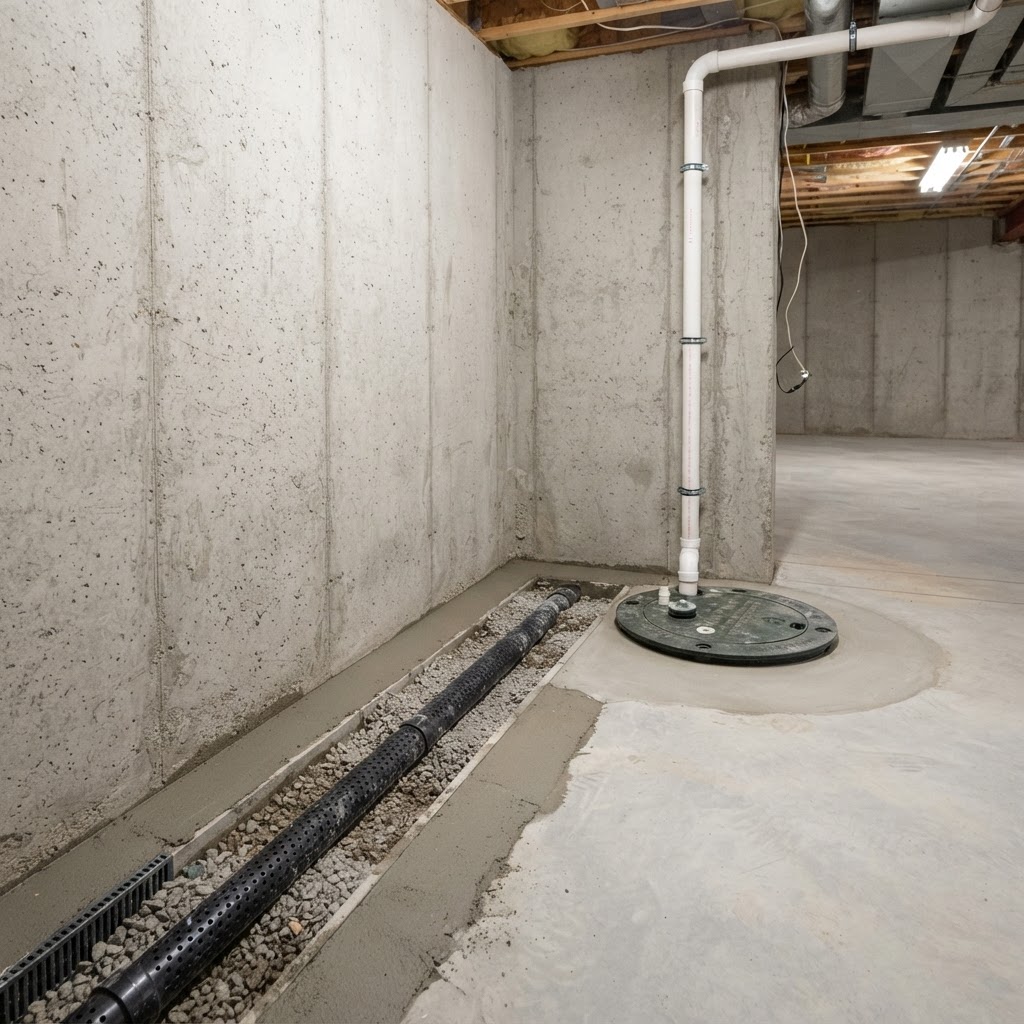
- New sump pit installation: cutting the floor, setting a perforated basin in stone, wiring a dedicated outlet as needed, and running the discharge.
- Pump replacement: swapping a failing or undersized pump in an existing pit.
- Battery backup systems: a second pump that runs on a charged battery, often with an alarm.
- Water-powered backups: use municipal water pressure rather than electricity. Only an option on city water; not for well homes.
- Discharge fixes: relocating or extending lines, freeze protection, check valve replacement.
- Pairing with drain tile: most pits are the collection point for an interior drain.
Choosing a Pump
Submersible vs. pedestal. Submersible pumps sit in the water, run quieter and allow a lid. Pedestal pumps sit above the pit and are easier to service.
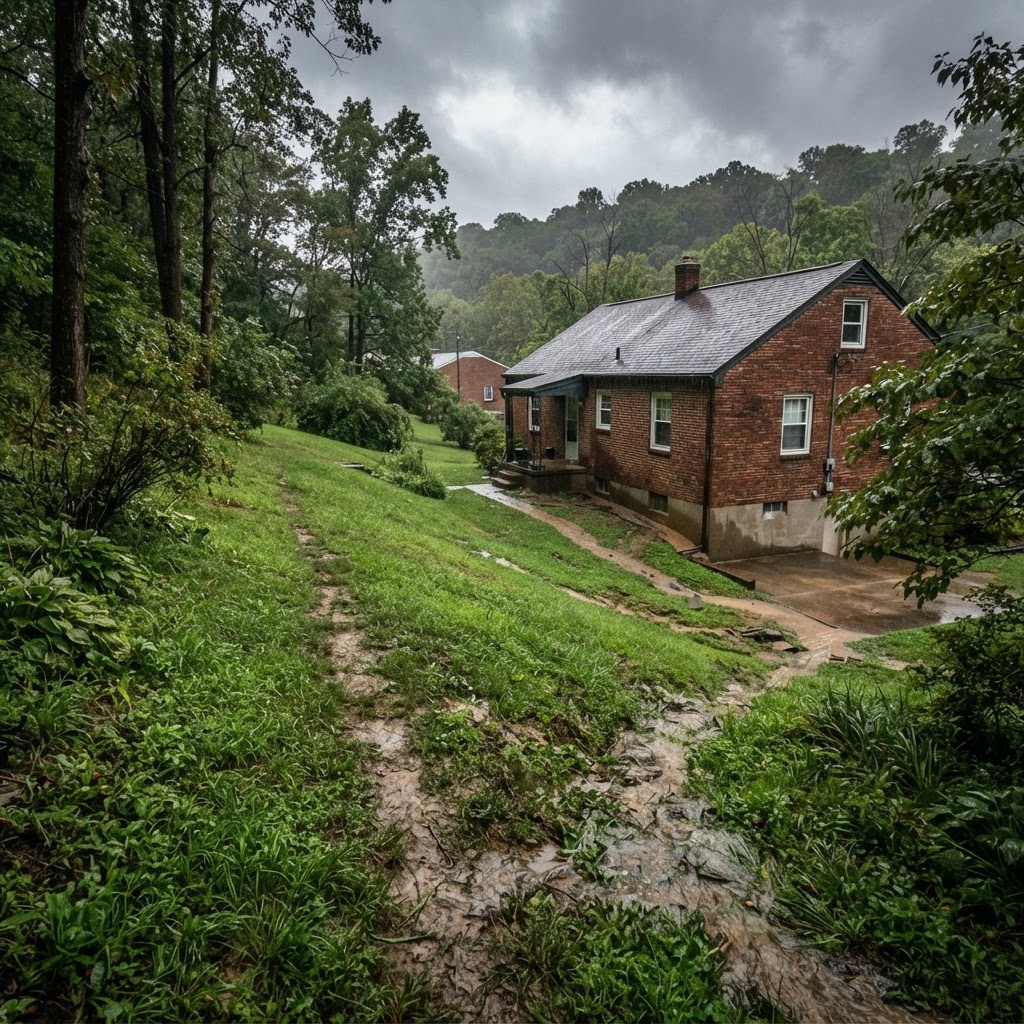
Capacity. Pump size depends on how much water comes in and how high and far it has to be pushed. Lots that drain off a hillside can push a lot of water to the pit during a storm.
Switch type. Vertical and tethered float switches each have trade-offs. Switch failure is a common cause of pump failure.
Lid. A sealed, gasketed lid reduces humidity, odor and soil gas.
Where Should the Water Go?
On sloped lots, water dumped on the uphill side just runs back to the foundation. The discharge should exit downhill or far enough out to drain away. Don't direct it onto a neighbor's property, a public sidewalk where it can ice up, or into the sanitary sewer, which many utilities prohibit. If you're near a sinkhole, ask about local rules before routing water there.
Costs from HomeGuide
According to HomeGuide's sump pump installation cost guide:
- Installed: about $600 to $2,500 on average
- Replacing an existing pump: about $400 to $700
- Installing through a concrete floor can push totals to $2,500 to $5,000
- Battery-run pump units: about $150 to $800 for the unit
- New or updated drainage systems: about $4,000 to $12,000
National data. Ask for a written, itemized quote.
Maintenance
- Test a few times a year by filling the pit with a bucket of water.
- Clear debris from the basin and the intake screen.
- Replace backup batteries on the maker's schedule (HomeGuide says every 3 to 5 years).
- Watch for short-cycling, odd noises or a pump that never stops.
Frequently Asked Questions
Don't wait for the next outage.
Call (317) 798-0634 or request a quote.