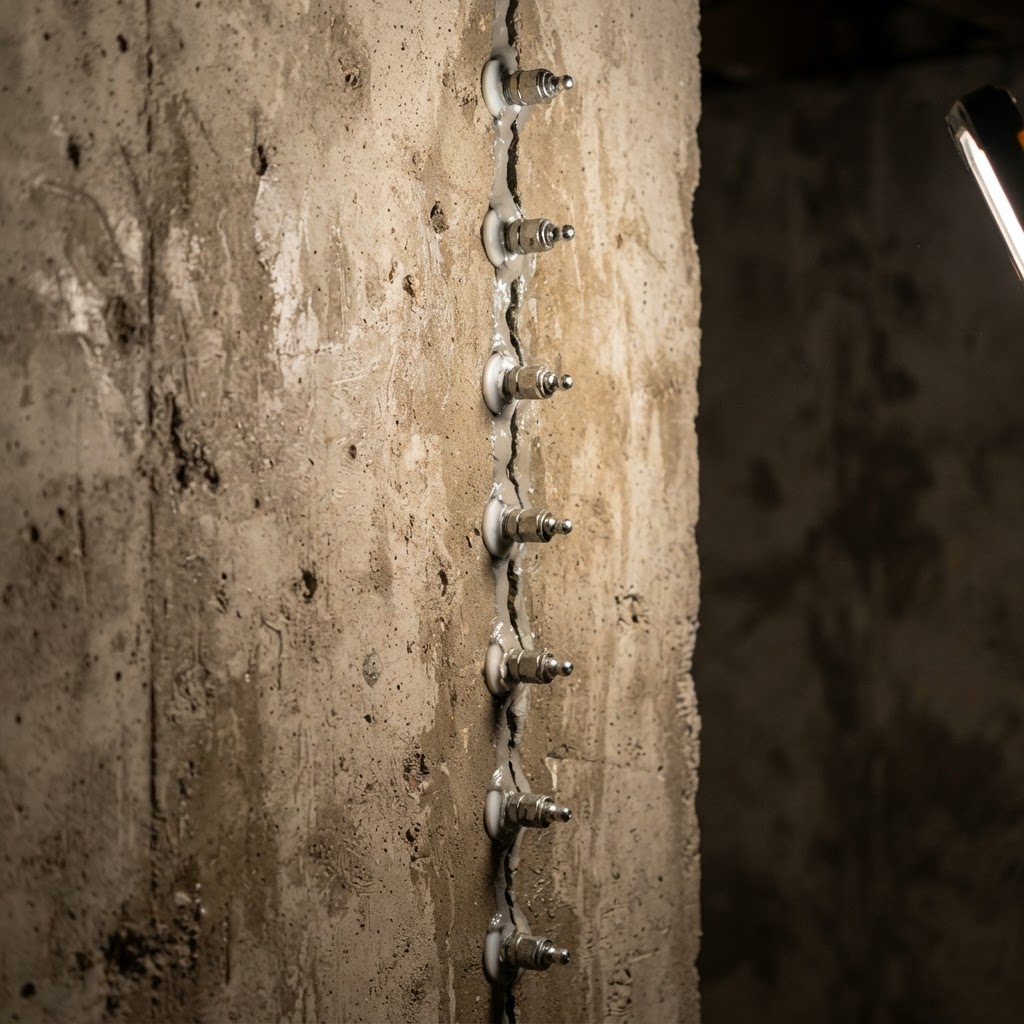
A basement wall that bows inward isn't a waterproofing problem first; it's a structural one. But in Bloomington the two are tightly linked, because the same wet clay that pushes water through a wall also pushes the wall itself.
Bloomington Basement Waterproofing connects you with an independent contractor who handles wall stabilization in Monroe County. Call (317) 798-0634.
What Causes Walls to Bow Here
Expansive clay. Clay soils weathered from local limestone swell when soaked and shrink when dry. Each wet season, saturated clay pushes against the foundation. Over years, that pressure moves walls.
Frost. Wet soil that freezes against the upper part of a wall expands and adds lateral force, which is one reason bowing often shows up a few feet below grade.
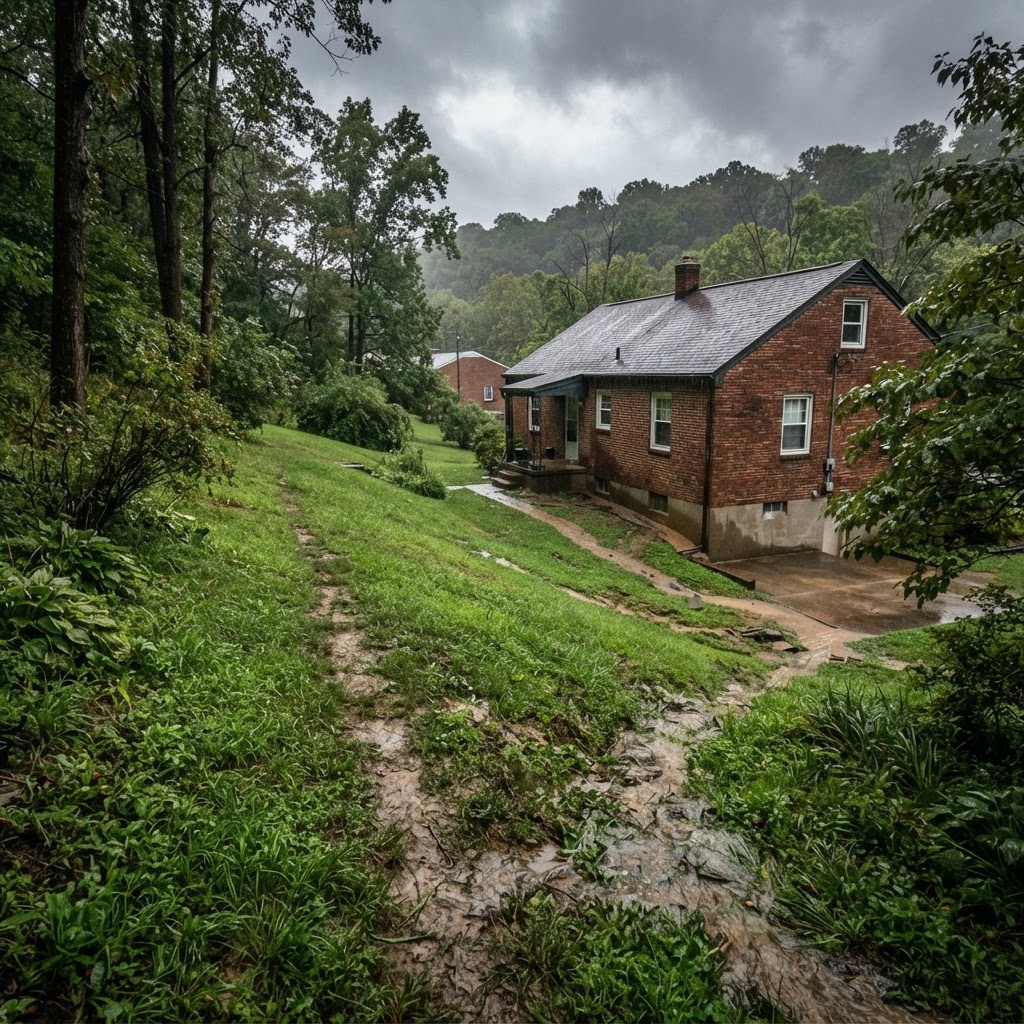
Poor drainage. Downspouts dumping beside the house and a lot that slopes toward the foundation keep the soil soaked. On hillside lots, the uphill wall takes the most pressure.
Heavy equipment or added fill. A driveway or a new patio poured close to the wall, or heavy trucks during construction, can add load.
Warning Signs
- A horizontal crack running along a block wall, often near mid-height
- Stair-step cracks in mortar joints at the corners
- A wall that leans in at the top or bulges in the middle
- Gaps between the wall and floor joists or the sill plate
- Water entering along new cracks
- On poured walls, diagonal cracks spreading from corners or windows
Measure the wall: hang a string line or use a long level, and record how far it deviates. Note the date and recheck every few months. A wall that's still moving needs attention sooner.
Repair Options
Carbon fiber straps. High-strength straps epoxied to the wall at intervals. Low-profile and fast, best for walls with limited movement (typically under about two inches). They stop further movement but don't push the wall back.
Steel wall braces (I-beams). Vertical beams anchored to the floor and the framing above. They resist further movement and, on some systems, can be tightened over time to nudge the wall back. They stick out into the room a few inches.
Wall anchors. Plates on the inside wall connect through steel rods to anchors buried in the yard. They can be tightened gradually to straighten the wall over seasons. They need yard space free of rock, utilities and structures. Shallow limestone in parts of Monroe County can rule them out, so ask.
Excavate and rebuild. For walls that have moved severely or are crumbling, the soil is dug out, the wall is straightened or rebuilt, then waterproofed and backfilled with drainage stone. It's the most expensive option and the most complete.
An engineer's evaluation is wise for significant movement, and lenders or buyers may ask for one.
Fix the Water Too
Stabilizing the wall without reducing soil pressure is half a repair. Most good plans pair the structural fix with interior drain tile, extended downspouts and regrading (yard drainage). If you're excavating to rebuild, it's the ideal time for an exterior membrane and footing drain.
Limestone and Older Foundations
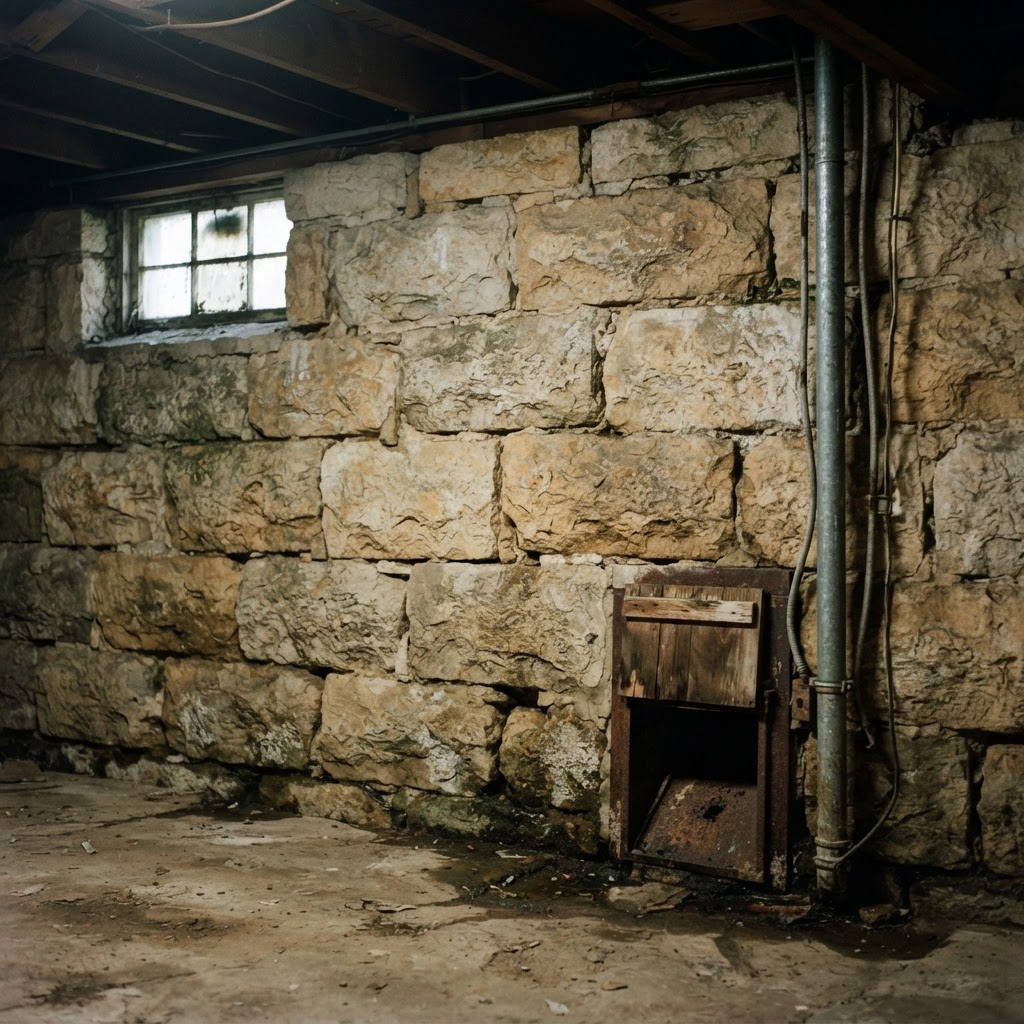
Rubble or cut-stone foundations in Bloomington's oldest neighborhoods don't bow in the same way as block. They tend to lose mortar and shift stones. Repairs may involve repointing, partial rebuilding or interior reinforcement. Find a contractor comfortable with old stone.
What It Costs
As typical planning estimates, carbon fiber is usually priced per strap in the hundreds, anchors and steel braces typically $500 to $1,500 or so per unit, and full excavation and rebuild can run well into five figures. These are not quotes. See the Bloomington waterproofing cost page.
Permits
Structural foundation repairs commonly require a permit from the City of Bloomington or Monroe County. Ask the contractor who handles it.
What Bowing Wall Repair Costs
Wall repair cost depends on the method (carbon fiber straps, steel braces, wall anchors or excavation and rebuild), the length of wall affected, how far it has moved, access for anchors in the yard, and whether finished walls must be opened. Straps and braces for one wall are a smaller project than anchoring several walls or excavating. In Bloomington, heavy, wet soils are a common driver. Costs vary from house to house; treat any figure you see online as a general typical range and call (317) 798-0634 for a free quote.
See all ranges on our basement waterproofing cost guide.
Frequently Asked Questions
Seeing a horizontal crack?
Call (317) 798-0634 or request an inspection.