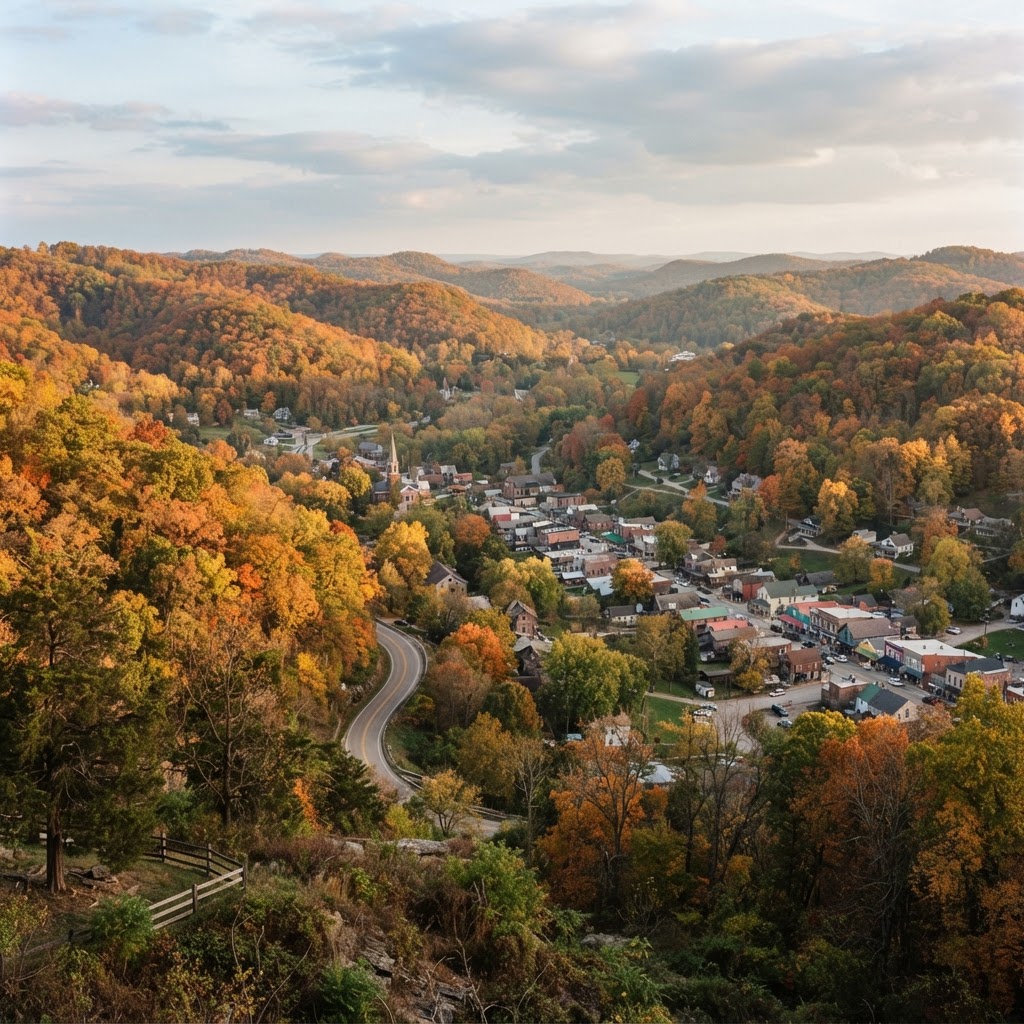
Most basement water starts as rain on your roof and your yard. On Bloomington's rolling lots, getting that water away from the house is often the cheapest, highest-value step in keeping a basement dry, and sometimes it's the only step needed.
Bloomington Basement Waterproofing connects you with an independent local contractor who handles exterior drainage. Call (317) 798-0634.
Downspouts First
A typical roof can shed thousands of gallons in a heavy storm, and every downspout concentrates that flow into one spot. If it lands next to the foundation, it soaks the backfill and loads the wall.
- Extend discharge well away from the house, farther on slopes.
- Buried solid pipe can carry water under lawns and walks to daylight or a pop-up emitter.
- Keep lines sloped and cleanable; buried lines can clog with leaves and roots.
- Don't tie downspouts into a footing drain or perforated pipe near the foundation; that puts water right where you don't want it.
Grading
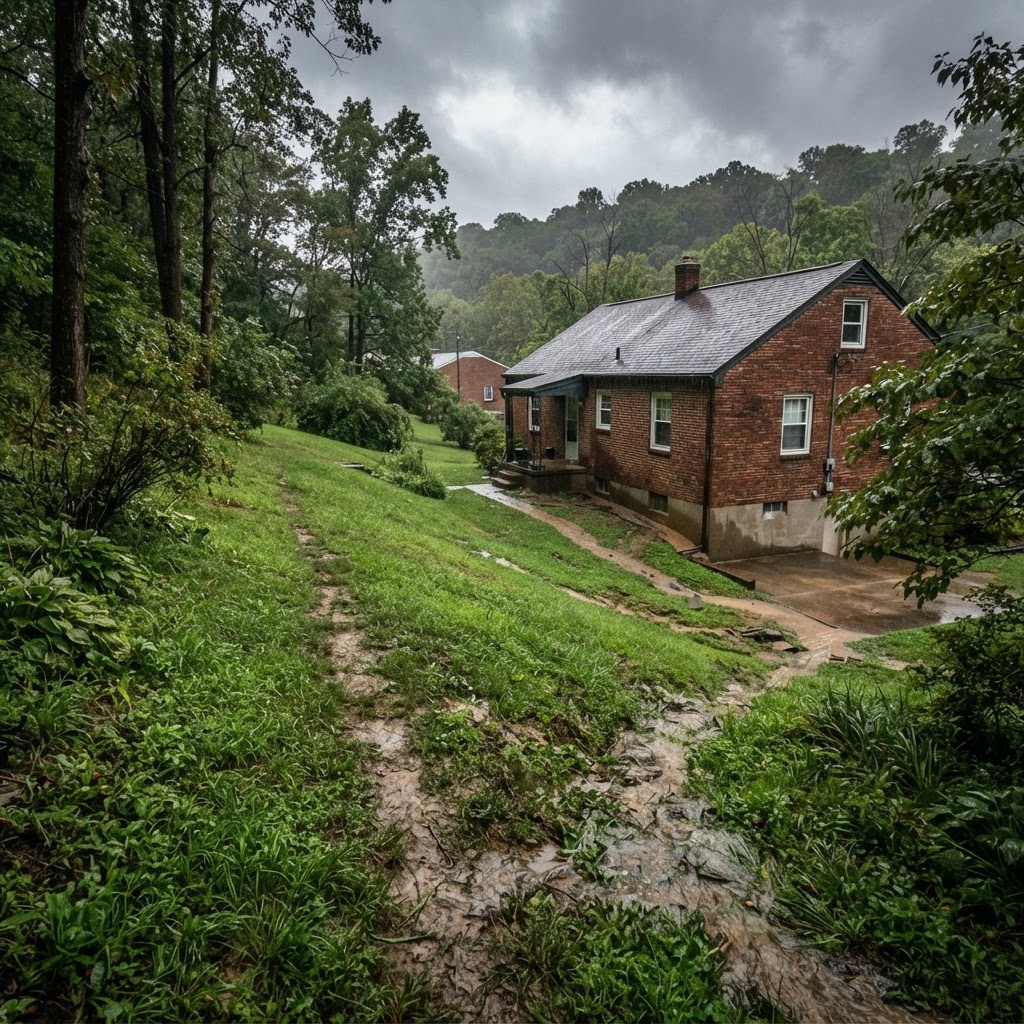
Soil should slope away from the foundation for several feet. Over time, backfill settles and the slope reverses, sending water toward the house. Adding and compacting clay-rich soil (not mulch or loose topsoil alone) to restore positive grade is basic but effective. Mulch beds piled high against siding can hide reverse slope.
French Drains
A French drain is a gravel-filled trench with perforated pipe that collects subsurface and surface water and carries it to a lower outlet. Well-built ones use fabric to keep clay fines out of the stone. In Bloomington clay, they work best where they can drain to daylight downhill. A French drain with no outlet simply becomes an underground bathtub.
Curtain Drains on Hillside Lots
A curtain drain is a French drain placed uphill of the house, across the slope, to intercept water moving through the soil before it reaches the foundation. On hillside properties where water perches on dense clay or rock and flows sideways, a curtain drain can noticeably reduce basement seepage.
Swales and Dry Creek Beds
A shallow, grassed or rock-lined swale guides surface runoff around the house. Dry creek beds look natural and handle heavy flows. Both are low-tech and durable.
Karst Considerations
Monroe County has sinkholes and karst features. Directing concentrated water into a sinkhole can cause erosion, collapse or groundwater contamination, and local rules may restrict it. Discuss outlet locations with your contractor and check with the City of Bloomington or Monroe County if you're unsure.
Neighbor and Property-Line Issues
Don't discharge onto a neighbor's property or a sidewalk where it freezes. If runoff from a neighbor's lot reaches yours, a swale or curtain drain on your side may be the practical answer.
When Drainage Isn't Enough
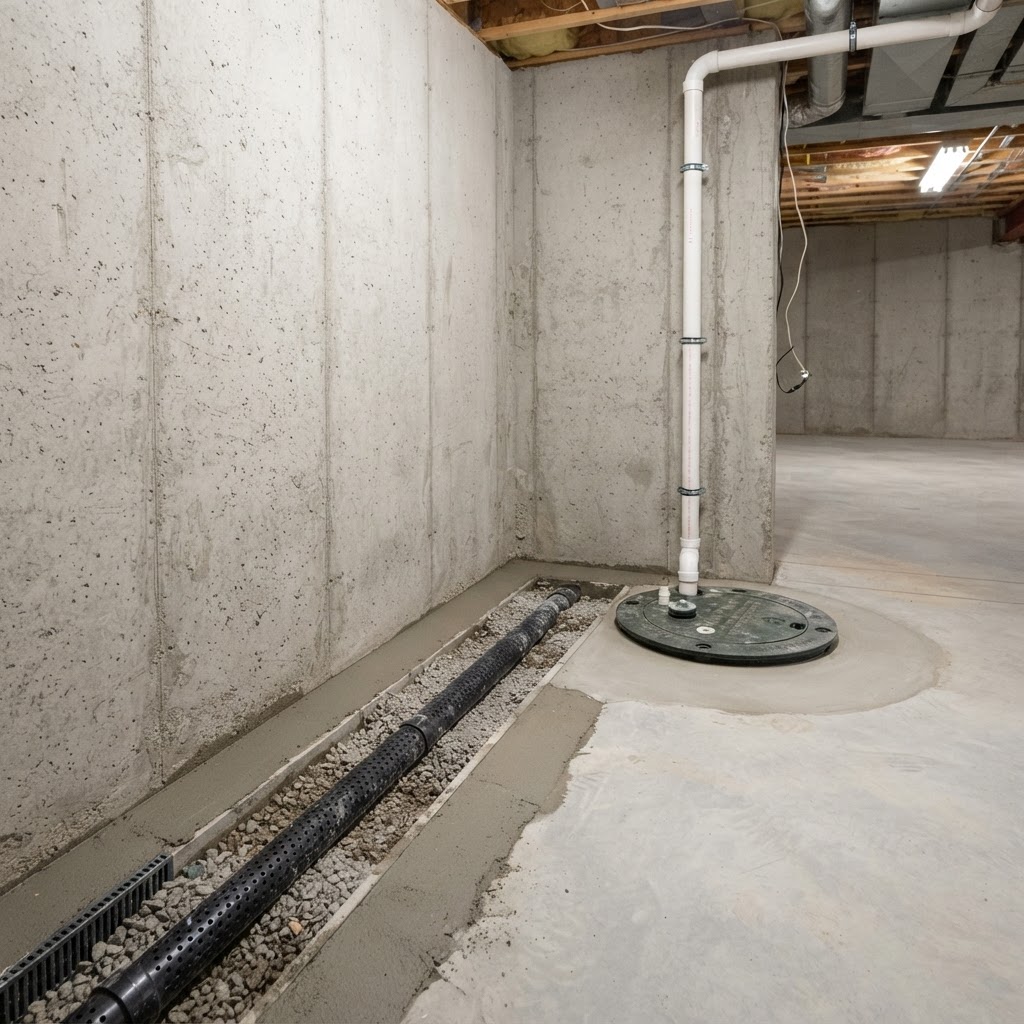
If water still enters after gutters, downspouts and grading are fixed, the groundwater pressure needs relief at the foundation, usually interior drain tile and a sump. Bowing walls also call for drainage paired with wall stabilization.
Maintenance
Clean gutters at least twice a year, more under big trees. Flush buried lines periodically and check emitters after storms. Watch for new low spots.
What It Costs
As typical planning estimates, downspout extensions can be under a couple hundred dollars, buried downspout lines several hundred to a few thousand, French or curtain drains often about $20 to $70 per linear foot, and regrading roughly $1,000 to $5,000. Not quotes. See waterproofing costs.
What Yard Drainage and French Drains Cost
Drainage costs depend on trench length and depth, pipe and stone, catch basins, the outlet, equipment access and landscaping restoration. Burying downspouts is usually a smaller job than a long French drain. Costs vary from house to house; treat any figure you see online as a general typical range and call (317) 798-0634 for a free quote.
See all ranges on our basement waterproofing cost guide.
Frequently Asked Questions
Water heading toward your house?
Call (317) 798-0634 or request a quote.